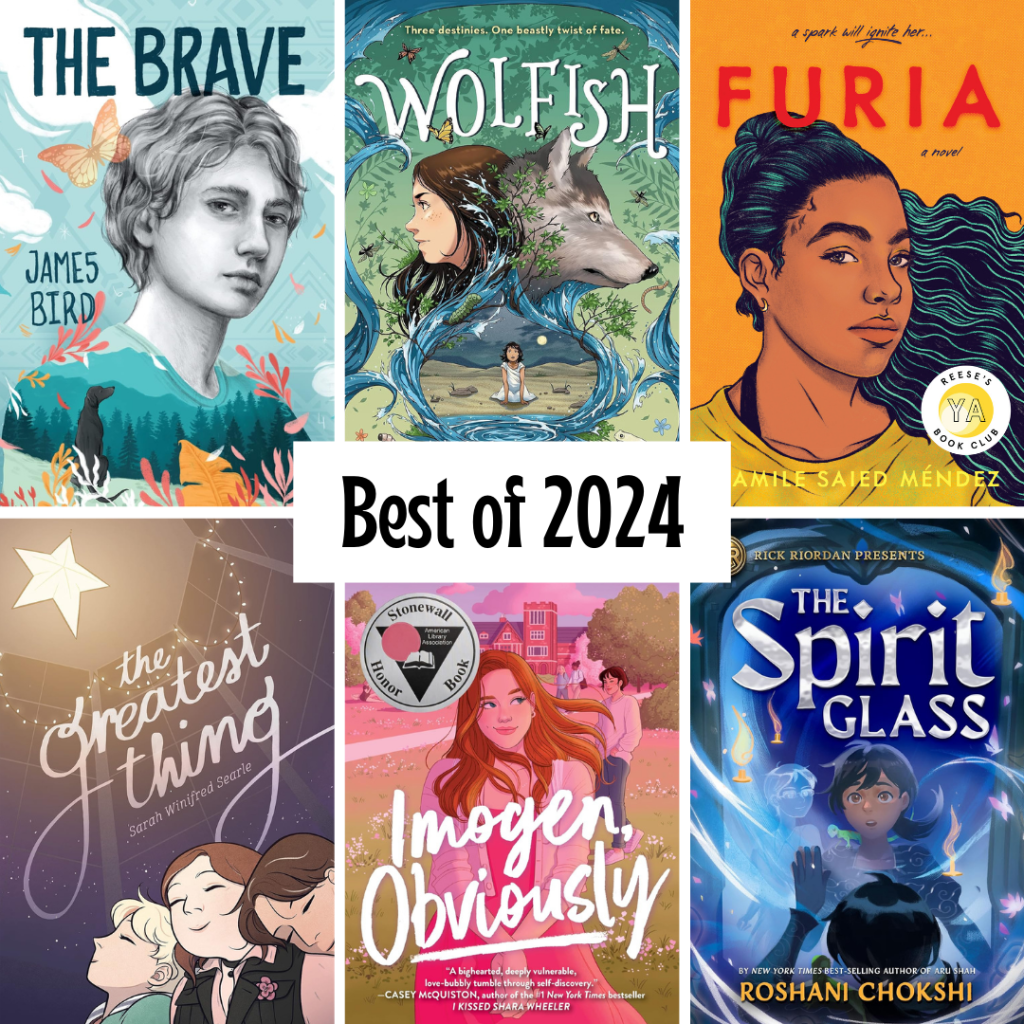
It’s late, but it’s here! Reviews of my top 10 books of 2024. Do you have any reading goals or highly anticipated book releases for 2025? Share in the comments!
As always, thank you for joining me on another year of bookish joy. I can’t wait to see what’s in store for 2025.

Babel by R.F. Kuang
When Robin Swift, orphaned in Canton, 1828, is discovered by the mysterious Professor Lovell, his life changes forever. Lovell brings him to London to begin training for the renowned Oxford Royal Institute of Translation, also called Babel. But Babel is known for more than literary and legal translation. The very top floor is home to the silver-workers, who enchant silver bars using meanings lost in translation. Thus, Babel is essentially the center of British power.
At Babel, Robin finds his first true home and friends. But he soon comes to realize that he is expected to obey Babel’s loyalty to the British empire, and with it, betray his homeland of China. Robin falls in with the clandestine Hermes Society, dedicated to preventing British expansion. But tensions rise as Britain orchestrates a war with China over silver and opium. Robin and his friends must make the ultimate choice: change Babel from within, or resort to violence?
The scope and emotional depth of this novel set it apart from anything else I’ve read. It’s obvious how knowledgeable Kuang is about the many challenging subjects laced into this book: race, colonialism, language, and British history. I am extraordinarily grateful that this book exists, not only because I’m a total history, race, and linguistics nerd, but also because its popularity brought its infinitely important message to so many readers.
Aside from the large-scale themes in Babel, its characters and emotional resonance truly shone. Kuang used every bit of the 542 pages to give each character an incredibly complex and tumultuous personal journey. The characters at the end of the novel are truly not the same kids we met in the exposition. The deep friendship between Robin and his friends, forged by shared experiences, close proximity, and heartbreak over years of intense intellectual growth, gave the novel true heart under its dark exterior. I can’t express how much value this novel has. Please read Babel, if only so I can scream to you about it without fear of spoilers.
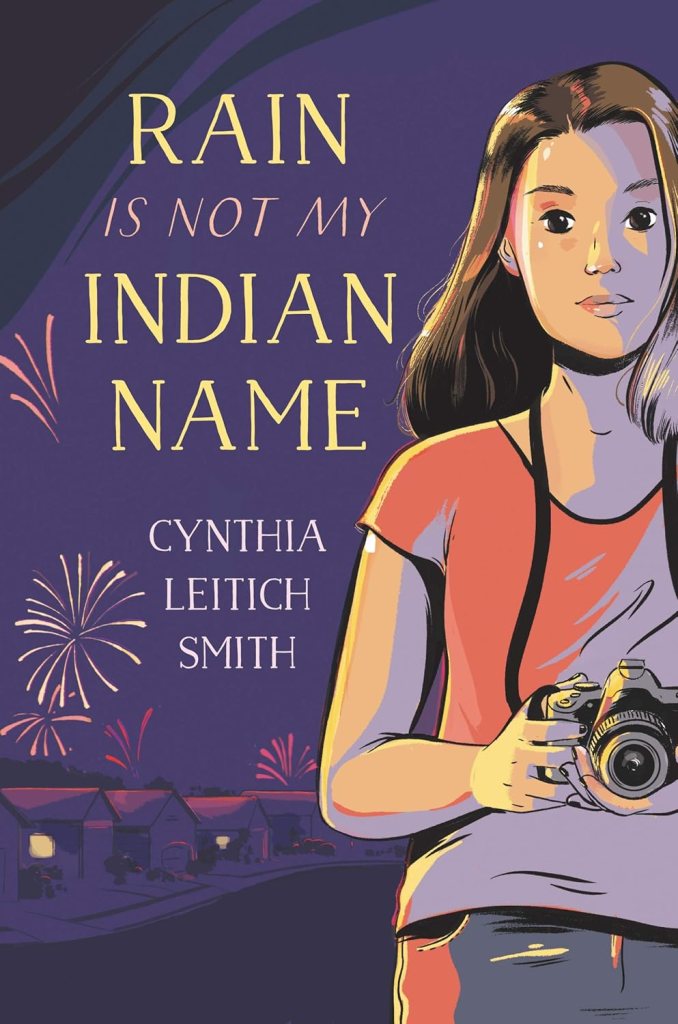
Rain Is Not My Indian Name by Cynthia Leitich Smith
It’s been six months since Rain’s best friend, Galen, died. Since then, Rain has done her best to shut the real world out, and right now that means trying to get out of her Aunt Georgia’s Indian Camp. But when the camp comes under fire–from no less than her best friend’s grieving mother–Rain agrees to photograph Indian Camp for her brother’s fiancée, who’s the news editor of the local paper. As her new job becomes more complex, Rain has to grapple with grief, family changes, and new friends.
I was truly impressed with the depth Smith was able to create in this brief, 135-page novel. Grief, loneliness, love, and small-town life are all explored in the book’s deceivingly simple dialogue. I’m also always thrilled to find a book like Rain that straddles the line between middle grade and young adult. With slightly older characters and hints of darker themes, Rain provides intellectual stimulation for mature readers while remaining hopeful and entertaining.
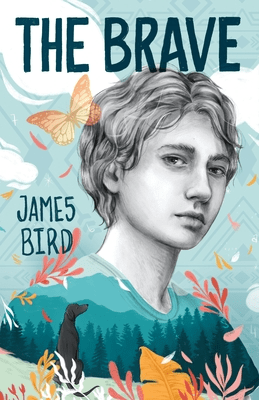
The Brave by James Bird
Collin counts letters. For every sentence spoken to him, he has to count the individual letters and spit the number out. He can’t help it, but it still causes adults and kids alike to avoid or torment him.
When Collin gets expelled from school again, his father decides to send him and his loyal dog, Seven, to live on a Minnesota Ojibwe reservation with Collin’s estranged mother. Collin’s new home comes with a kind, accepting mother and peculiar grandmother, and a next door neighbor: Orenda, a girl who believes she’s transforming into a butterfly. In Orenda, Collin finds his first friend besides Seven. On the reservation Collin learns to grieve, fall in love, and trust himself.
The Brave is a quiet book, an exploration of a flawed but deeply loyal boy, of a sad and colorful kind of magic, of the challenges and joys of beginning a new life.
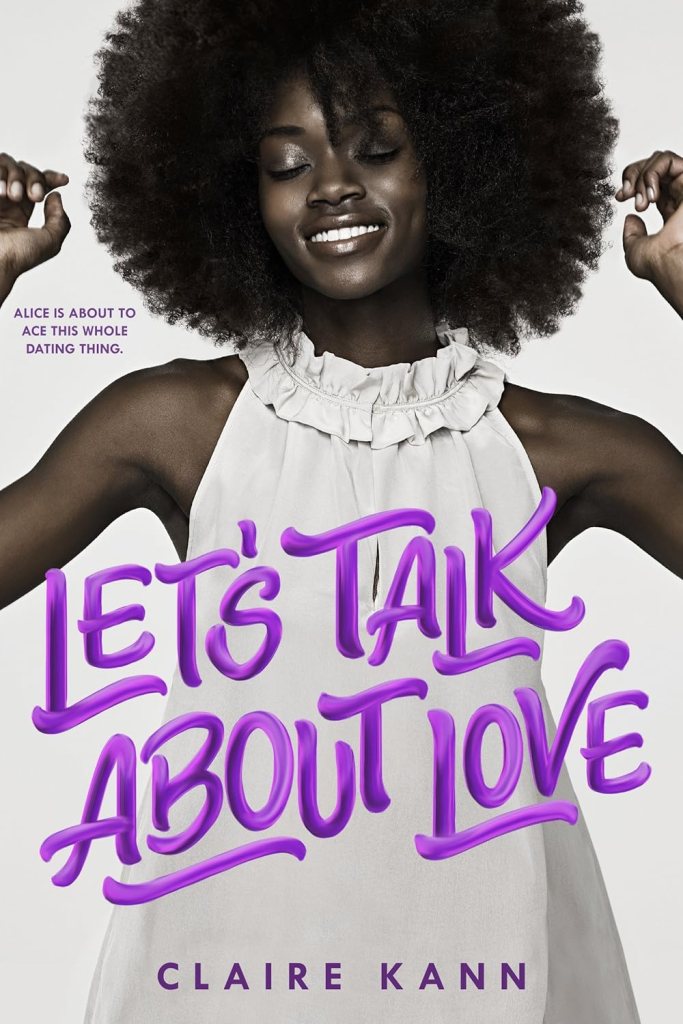
Let’s Talk About Love by Claire Kann
Alice is ready to spend her summer watching her favorite TV shows, hanging out with her best friends Feenie and Ryan, and working at the local library. But her relaxing plans are put on hold when her girlfriend decides to break up with her–because Alice is asexual.
Alice is still recovering from the abrupt breakup when she first sees Takumi, a new employee at the library. He’s not just cute–he completely fractures Alice’s Cutie Code, which she uses to determine everything’s level of cute (pillows and tastefully decorated rooms included). Alice is determined not to fall in love again, not after how things turned out last time. But she can’t help but be drawn to Takumi, who makes her feel safe and understood.
Her friendship with Takumi, however, causes a rift in her friendship with Feenie. Alice values her friends more than anything. Can she fix her slowly disintegrating social life while trying to figure out her future? And how can she make Takumi understand how much she cares about him, and that she’s asexual?
Let’s Talk About Love was my entry into YA romance, and it’s still one of the best of the genre that I’ve read. Alice was the funniest, nerdiest protagonist I could hope for, and her experience with her romantic and sexual orientations felt deeply real. Takumi is a swoon-worthy but also very grounded love interest whose emotional connection with Alice makes you root for the couple through thick and thin. And Alice’s relationships with her friends are equally important to her, showing the different forms that love can take. I highly recommend this book to anyone who is sick of romance tropes.
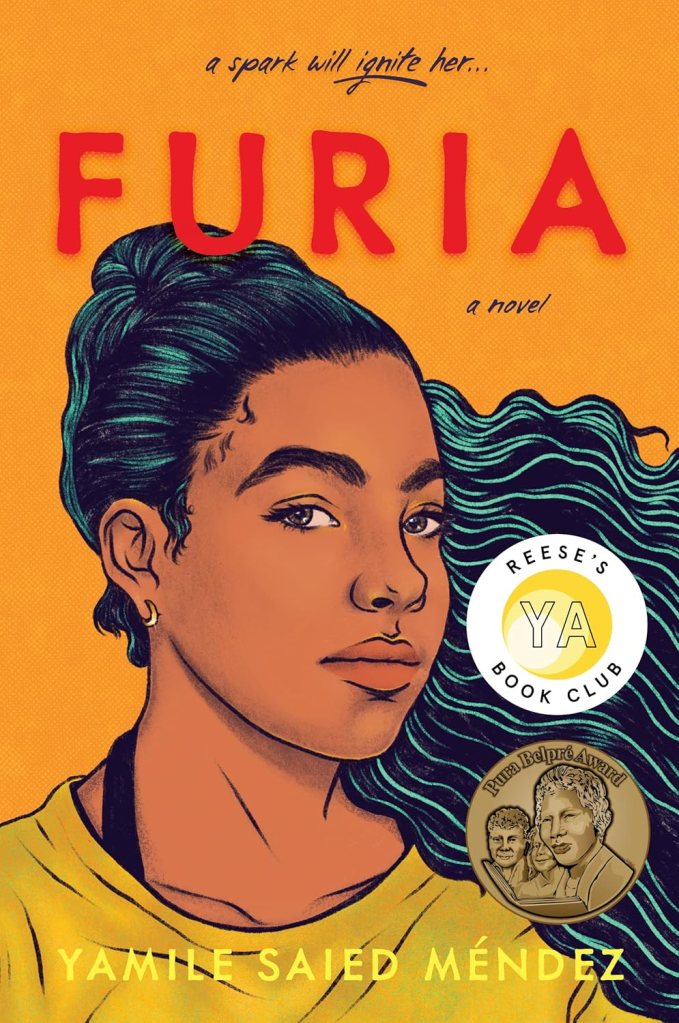
Camila Hassan has one true love: fútbol. When she’s on the field, she becomes La Furia, a goddess of footwork and precision. It almost lets her forget about home, where her parents’ disapproval of women in fútbol forces her to hide her greatest talent, and where her misogynistic father rules with an iron fist. The only thing Camila wants is to take her fútbol dreams to the next level, and her team’s qualification for the South American tournament may just get her there.
But Camila doesn’t factor Diego into the equation. After Camila’s first love left Rosario, he became an international fútbol star. But now he’s back home, over-complicating Camila’s life and her fútbol goals. Amidst tension about women’s rights, uncertainty about her future, and drama on her fútbol team, Camila will have to harness La Furia to stay true to herself and her dreams.
Furia is both a delicious page-turner and an example of awe-inspiring prose. The glimpse of Rosario, Argentina that Méndez gives us in Furia feels rich and lived-in, and it was a privilege to visit a place I’ve never been before. Finally, Camila is the definition of a Strong Female Protagonist. Her determination and ambition are unmatched, and the way she prioritizes her desires in a world that tells her to sit down and shut up is truly inspiring. But she’s far from perfect–she’s a teenager, and her decisions and uncertainty make her one of the most well-rounded characters I’ve read in a long time.
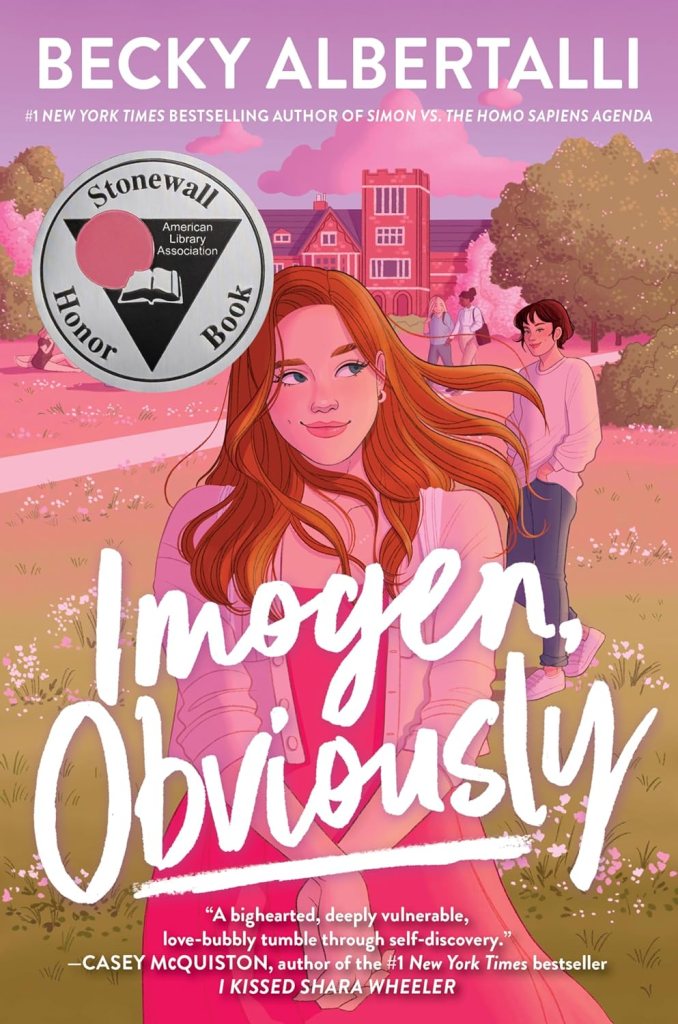
Imogen, Obviously by Becky Albertalli
When Imogen Scott visits her best friend Lili at college for the first time, she’s a little nervous to spend time with Lili’s cool new queer friend group. After all, Imogen is as straight as they come, and she’s sure she won’t fit in with them. But when she arrives, Lili–newly out as pan and more insecure than Imogen realized–reveals that she’s told her friends that Lili and Imogen used to date. Thrust into a new perceived identity, Imogen finds herself clicking easily with Lili’s new friends, especially cute Tessa. Imogen begins to wonder if Lili’s lie may be truer than it seems.
Most people start the Becky Albertalli canon with the classic Simon vs. the Homosapiens Agenda, but I’m glad I started with Imogen. In the months since I read it, I’ve steadily devoured almost every other book Albertalli has written, and am waiting anxiously for her latest, Amelia, If Only, to release. She is able to perfectly capture the turmoil and exhilaration of being a teenager, especially one like Imogen who is on an intense journey of self-discovery. Every character and dynamic in this book felt deeply realistic, and Imogen’s insecurity and overthinker tendencies felt way too relatable. I also loved the exploration stereotypes within the queer community, and the message that there’s more than one way to be queer or to recognize your queerness.
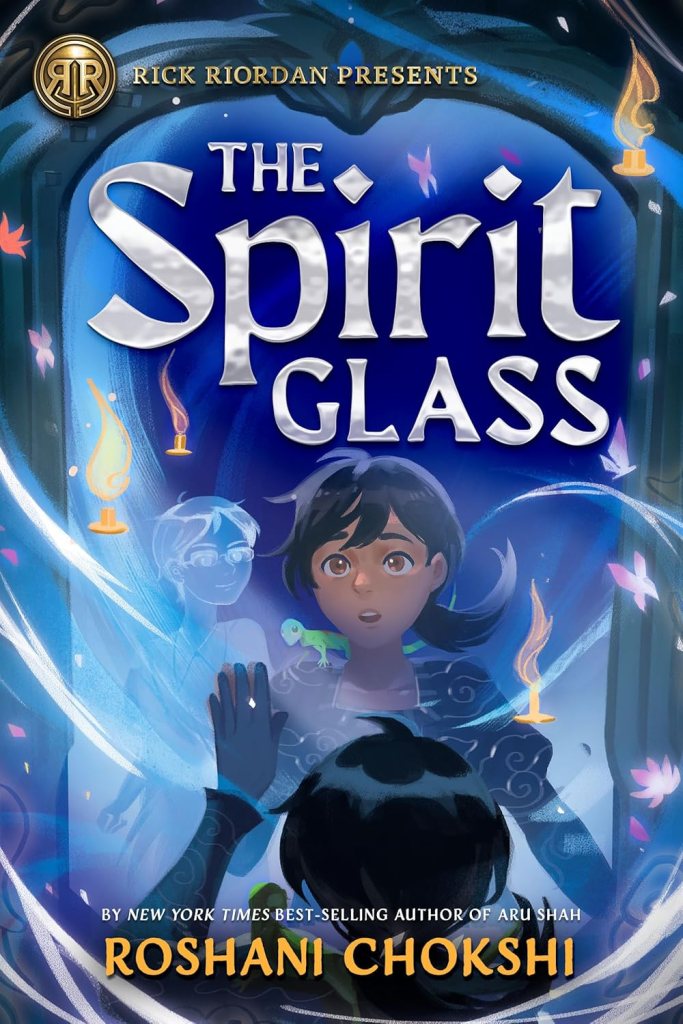
The Spirit Glass by Roshani Chokshi
Every Saturday, Corazon Lopez’s parents visit as ghosts. Corazon spends the rest of the week in her Aunt Tina’s magical house, waiting to begin babaylan training. When Corazon becomes a fully fledged babaylan, she’ll finally be able to bring her parents back for real, instead of relying on a soul key for a few precious hours every week.
But Corazon’s key is more powerful than she realized. When it is stolen by a ghost, the balance between the spirit and mundane worlds is thrown off. Corazon and her gecko anito, Saso, must venture into the spirit realms to lay the ghost to rest and make a new spirit key. Along the way they meet Leo, a literal ghost writer. Will the three of them be able to save the spirit realms from collapsing into chaos?
Chokshi’s Aru Shah series is one of my favorite fantasy epics, so I was excited to pick up The Spirit Glass, which revolves around Filipino mythology. Like the Aru Shah books, The Spirit Glass is a page-turner with plenty of comic relief and a loveable (but also terrifying) talking animal friend. But this book contains an aching wisdom that sets it apart from Aru Shah. The Spirit Glass understands death: its pain, its necessity, its tragedy. It doesn’t shy away from the hard truths. I know it’s cliché, but this is truly a “you’ll laugh, you’ll cry” book. Aside from that, I reveled in every moment I spent in the Filipino spirit realms, and I hope you will too!
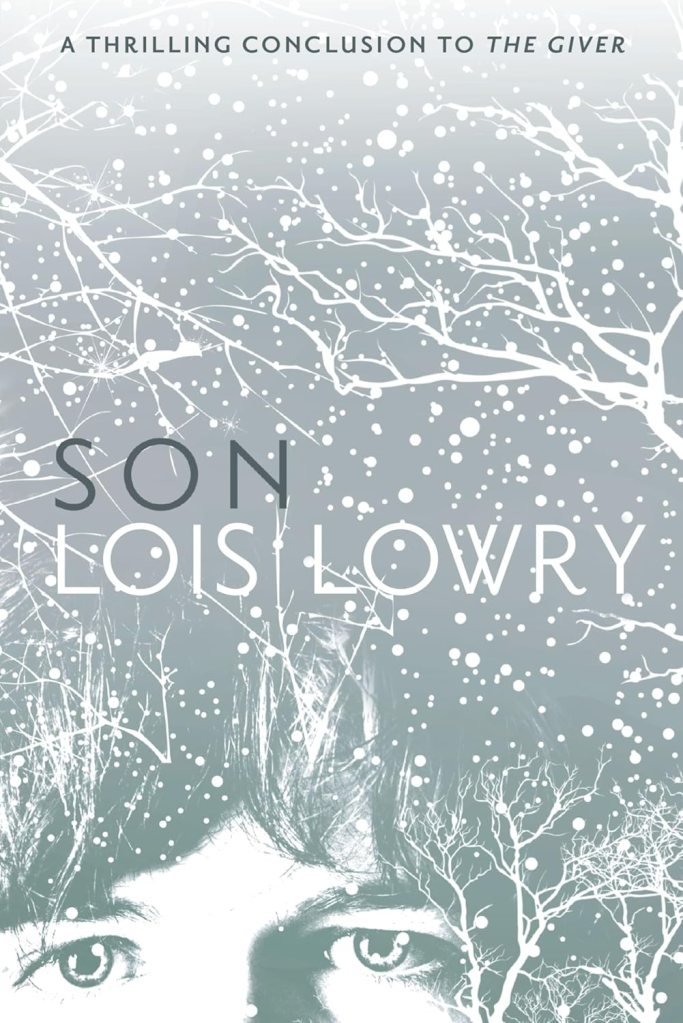
Son by Lois Lowry
Claire was fourteen when she delivered her first Product. She was supposed to forget her son, as all Vessels must, but she couldn’t. So when her baby disappears from her Community, Claire embarks on an unimaginable journey to find him. Outside the rigid Community, she finds freedom and love in ways she never experienced; but will she find the one thing she is truly looking for?
It’s been years since I first read (and reread, and reread) The Giver, but I had yet to finish the series until this year. I’m so glad I did. Son brings back characters from the first book and ties the unique communities of The Giver, Gathering Blue, and Messenger together in a deeply satisfying conclusion. Lowry’s worldbuilding in this series is immaculate; somehow both devastatingly simple and wildly complex, it immerses you in a world with unsettling echoes of our own.
Claire is a courageous, lovable character. Her loyalty and the journey it takes her on made me cling to every page of this precious book.
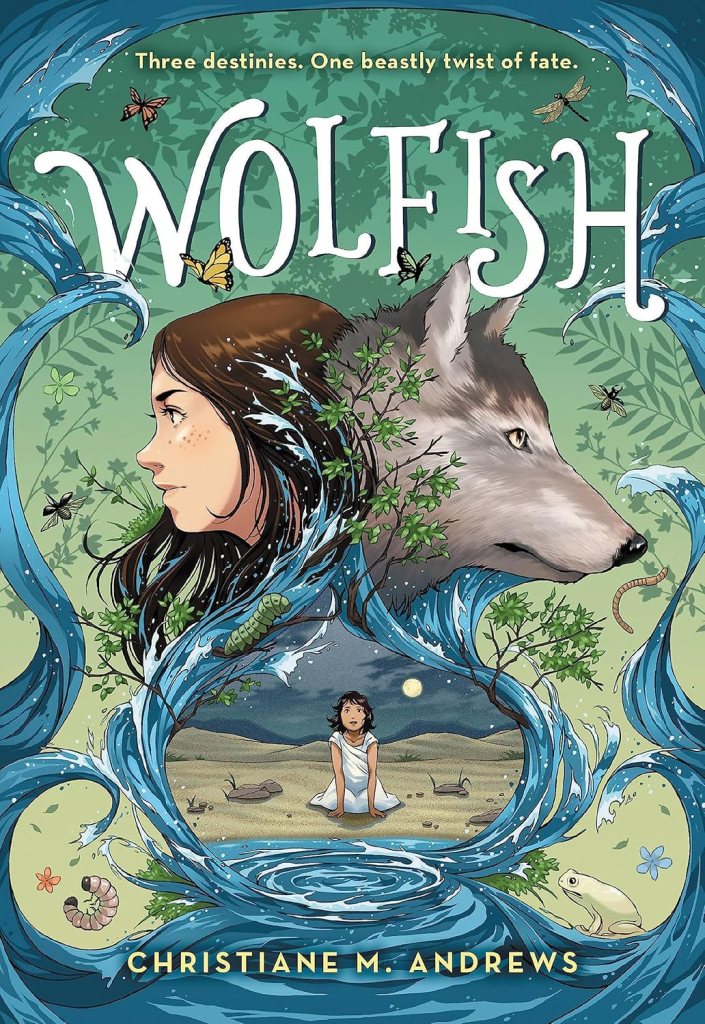
Wolfish by Christiane M. Andrews
Alba has not aged in years, thanks to her position as the oracle’s apprentice in a dark island cave. When the oracle is visited by a boy-king, Alba is supposed to tell the boy what he wants to hear. But instead she lets loose a terrible prophecy, and with it a reign of cruelty that will affect everyone in the realm…
…even Rae, the adopted daughter of shepherds, tucked away on an idyllic farm high in the mountains. When Rae encounters a wolf among her flock, she unlocks a key to her past that could put her in unimaginable danger.
Andrews’s lyrical, unexpected prose lends a timeless, otherworldly flavor to this whimsical story, which is inspired by Roman mythology. Sprinkled throughout are invented primary sources, giving the story a feeling of truth, or at least of long-lasting legend. Everything in this book, from the chapter titles to the characters to the way magic reveals itself, is expertly woven and beautifully done.
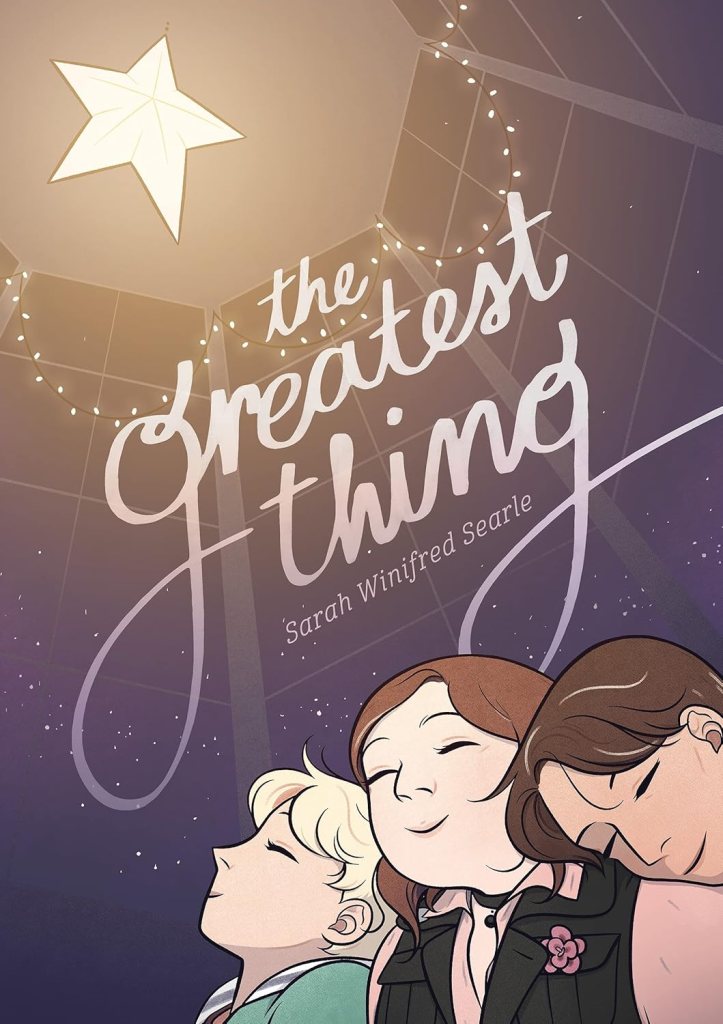
The Greatest Thing by Sarah Winifred Searle
Winifred is anxious to begin sophomore year without her two best friends, who transferred to a private school over the summer. But soon Win finds kindred spirits in Oscar and April, creative souls who encourage Win to pursue new avenues in her art. As Win, Oscar, and April embark on distinct emotional journeys, they’ll always be there for each other…right?
I can’t decide what’s more gorgeous in this book: the art or the complicated, supportive friendships. Oscar and April’s journeys of self-discovery are almost as central to the plot as Win’s, making them so much more than side characters. Through Win’s story, and the fairy tale she creates with her friends, Searle explores love, mental health, loyalty, and art.

 Wildflower Reads
Leave a comment